Paul Becker, « FURTHER READING », Paris
« FURTHER READING »
a solo show by Paul Becker
curated by John Douglas Millar
styled by Nadia Hebson
A Tenderness Within Time
What I register and value in Paul’s work, beyond the technical smarts and sheer visual intelligence, is the urbanity. His art is saturated with feeling(s), but it is never dogmatic, it never pushes or cajoles. Rather, it holds everything in suspension, potential coiled deliciously like a snake, or the bloom of cigarette smoke, one element shades into another, synaesthesia, a pinprick in the finger blooms a rose in the eye. It lets you be with it, inviting you into its own version of time, and it infects you – an inoculation against history as doomscroll. I think of Benjamin in Marseilles, slipping into the delicate, pearlescent bubble of his own mind, ‘sifting through the particles of workaday consciousness trying to find the revolutionary sparks.’
There is a quote from Barthes that I’m fond of, and that oftentimes comes to mind when I am trying to think about Paul - his painting, his drawing, his writing, himself. Barthes is lecturing at the College de France, and he is trying to get somewhere close to a concept of the neutral, though of course the point is to dance around the concept, to never let it settle, and then to allow it to step onto the cusp of metaphor without diving. “There is a passion of the Neutral,” he writes, “but […] this passion is not that of a will-to-possess. I sometimes recognize this passion in myself through the calm with which I witness the display of “wills-to-possess,” of dogmatisms. But this is discontinuous, erratic, as desire always is: this is not about a wisdom but about a desire.”
These works allow for something like a constructed opacity. In the drawings one can observe the reworking, the thinking and building present as completed line and as partially erased trace. So there is the presence of work but without fetishism of process. This is a dandy poetics, a constructed loucheness, a deadly serious poise.
…
I had written this much of a text for Paul when I was infected with SARS-CoV-2, that is Covid-19, for the fourth time since 2021. It was a rough dose, worse than I remember for any of the other three occasions. I lay in bed listening to my wife looking after my seven-year-old son in the other room, talking to him, the sounds of cooking, the everyday labour of childcare. I lay there in my son’s bedroom hoping I hadn’t passed it on to them, imagining those weird purple-horror-spike-mine-images of viruses soaking into my sheets, floating into the air of the room, catching in Lego sets, cardboard sculptures, drawings of poke mon. I remembered reading Paul’s book How I Made the Kick Inside the first time I had the virus, how liberating that was, how far from the diminishment all around at that time.
I’m as sure as I can be that this time I caught the virus on the TGV from Perpignan to Paris. At one point on that journey, I looked out of the window and saw a hillside burning, and then suddenly the train was engulfed in smoke, the window just a monochrome, grey, the smell of woodsmoke completely overwhelming and at the same time recalling expensive scented candles sold on the Rive Gauche, the woman behind me coughing wildly. Her cough sounded oddly like an ecstatic laugh, incongruous and heartbreaking at the same time. The final scene of Bergman’s the Seventh Seal came to mind, disappointingly predictable perhaps. Death leading the knight and other characters over the crest of a hill. And then Hans Castorp. And then a phrase- Against Nature. 21st Century consumptive. A man, or maybe a woman, with a bandage tied around their head top to bottom, smoking a cigarette. The palette of sickness.
I lay in my son’s bed thinking about Paul and I recalled something he told me once; he said that if an artwork is imbued with enough serious, focussed attention then it has a chance to become conscious. “Artworks that contain so much thinking, so deep an emotional life can lay claim to a form of sentience… I DO strongly believe it. An emotional existence + a cognitive existence + time = sentience.” I think we had been talking about Sienese painting, or, no, actually looking now at my messages it was Chardin’s paintings of children playing or being attended to by maidservants, a series of works that he began around 1737. The strange, ambiguous, cast of the subject’s attention echoes in Paul’s work. Look at the child being shown how to blow a soap bubble using a brass tube, the curls of hair on the master or servant’s temples (the tear in the fabric of his coat suggests the latter), these echo. What also resonates here is the way Chardin turned to the apparently ‘minor’ form of genre painting when everyone else was making grand history paintings. Paul’s work is resolutely interior.
Finally, listening to my wife pour water into a saucepan in the kitchen while I anxiously consider whether my blood is carrying enough oxygen, I think of the look on the maidservant Maria’s face as she repeatedly tries to light a match against a kitchen wall in Vittorio De Sica’s 1952 neorealist film Umberto D. Paul sent me a clip of this scene years ago and it has always felt like the key to something. De Sica famously allows for ‘dead time’ as Maria fails to light the match and then tries again, and again, and again. The director allows for the moment to hold and remain within a flicker between authentic gesture and artifice. The result is a kind of tenderness within time, the tenderness of true attention.
Benjamin, Barthes, Chardin, Huysmans, De Sica, they don’t explain anything about Paul’s painting as such. I gather them here merely as further reading.
John Douglas Millar
–
Paul Becker (b. 1967) lives and works in London, where he has engaged in his artistic practice (painting, drawing, music and writing) for over three decades. He received a Master of Fine Arts from Slade School of Fine Art, London.
Selected solo exhibitions include: Museum of Contemporary Art, Antwerp; Andrew Dubow, New York City; Marc Jancou Gallery, Saanen; Mackintosh Lane, London; Drop City, Newcastle; Le Salon, Brussels; Vane Gallery, Newcastle; Transition Gallery, London; and Chapter Gallery, Cardiff. In 2026, Becker had a three person exhibition at Château Shatto, Los Angeles and was part of a group exhibition at Sans titre, Paris in 2025.
Becker’s artwork and writing has been presented at venues across the United Kingdom and Europe, including: Swedenborg House, London; Monash University Museum of Art, Melbourne; Towner International Biennial, Towner Eastbourne, Eastbourne; MAUVE, Vienna; M HKA, Antwerp; Whitechapel Gallery, London; Institute of Contemporary Arts, London; Hollybush Gardens, London; and Studio Voltaire, London.
John Douglas Millar is a Scottish writer based in London. He is currently working on a biography of the American photographer Peter Hujar. (Fitzcarraldo/Liveright 2030).
Nadia Hebson (b. 1974) is an artist based in London. She is the Head of Graduate Painting at the Slade School of Fine Art.
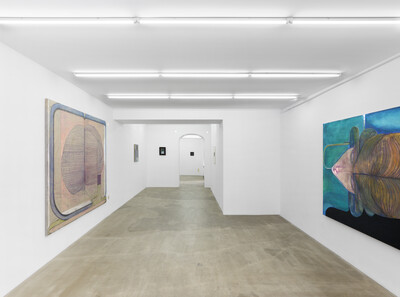
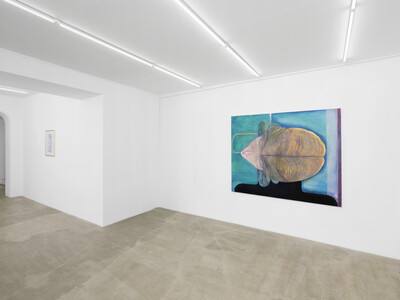
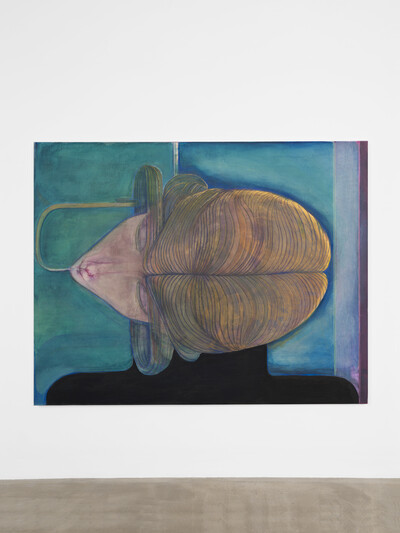
Paul Becker, Untitled (Breathing), 2026, gouache, coloured pencil and watercolour on canvas, 150 × 192 cm, unique
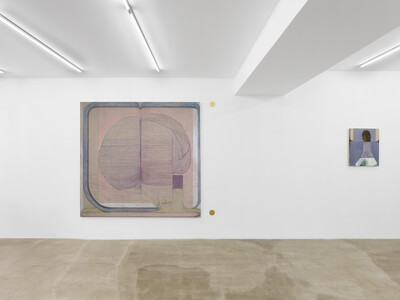
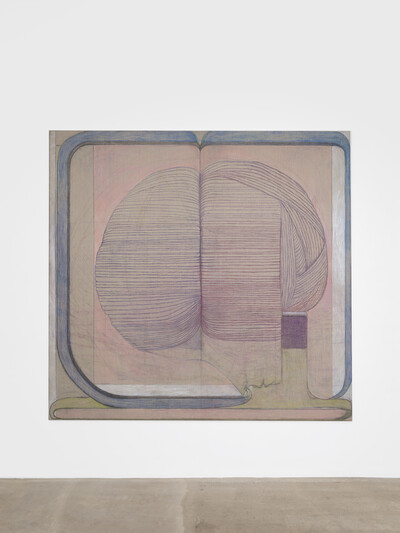
Paul Becker, Untitled (Collar & Breath), 2026, coloured pencil on linen, 190 × 182 cm, unique
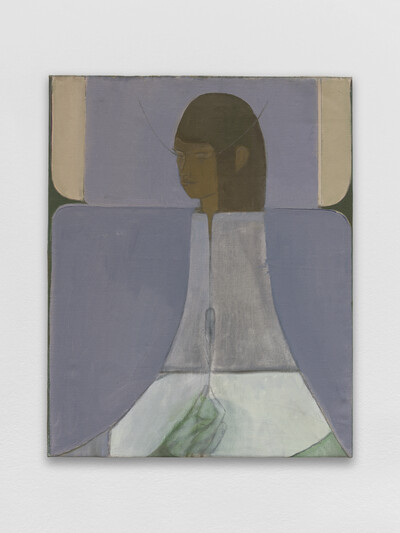
Paul Becker, Feather, 2026, oil on linen, 60 × 48 cm, unique
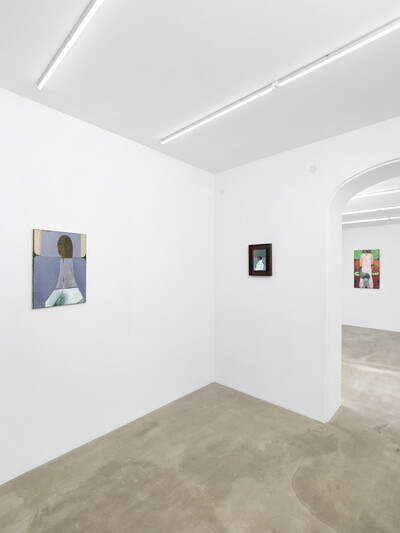
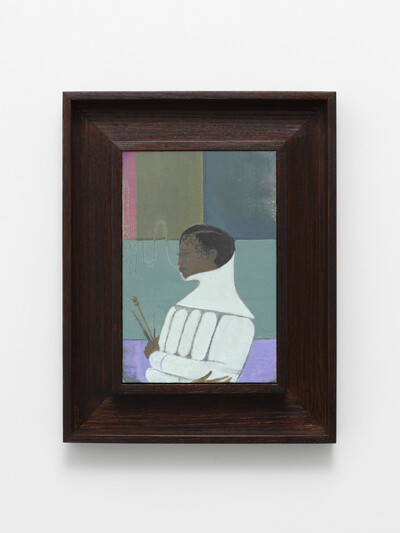
Paul Becker, Painter, 2025, oil on aluminum sheet, 23.4 × 15.6 cm (unframed), 35.5 × 27.7 cm (framed), unique
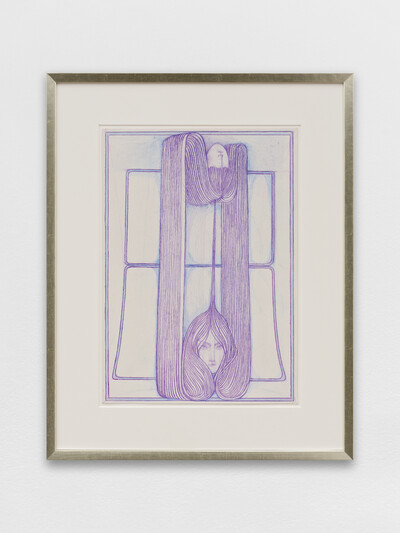
Paul Becker, Untitled (Twins) III, 2025, coloured pencil on paper, 42 × 29.7 cm (unframed), 59 × 46.7 cm (framed), unique
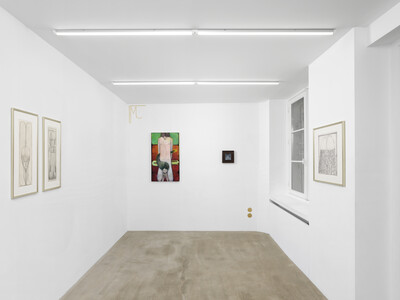
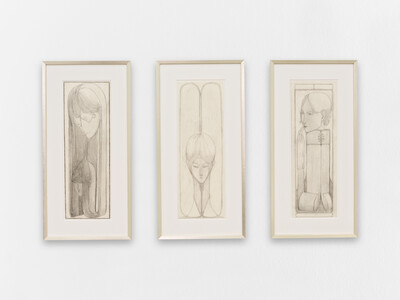
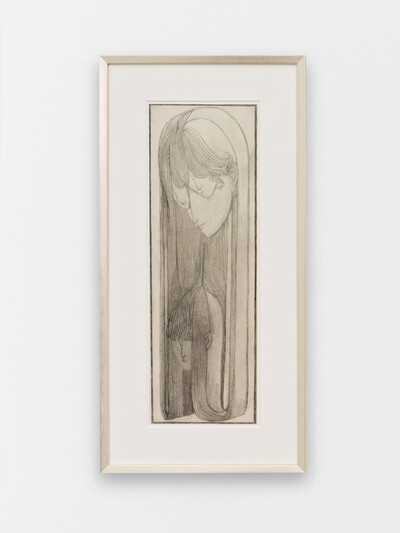
Paul Becker, Untitled (Mother and Siblings), 2026, coloured pencil on paper, 55.5 × 18.2 cm (unframed), 72.5 × 35.7 cm (framed), unique
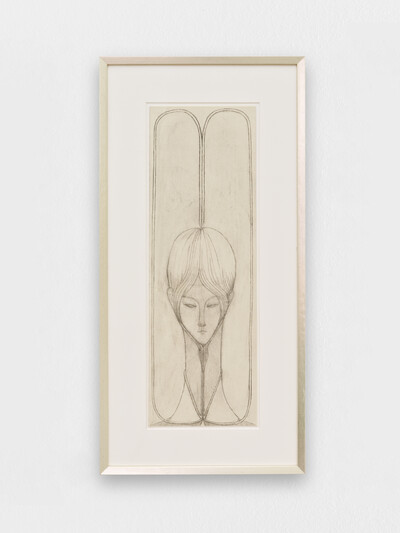
Paul Becker, Untitled (Wolf’s Head Collar), 2026, coloured pencil on paper, 55.5 × 18.8 cm (unframed), 72.5 × 35.7 cm (framed), unique
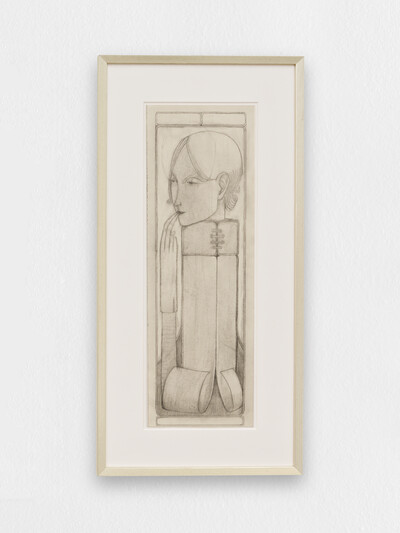
Paul Becker, Figure with Collar & Glove, 2026, coloured pencil on paper, 55.5 × 18.2 cm (unframed), 72.5 × 35.7 cm (framed), unique
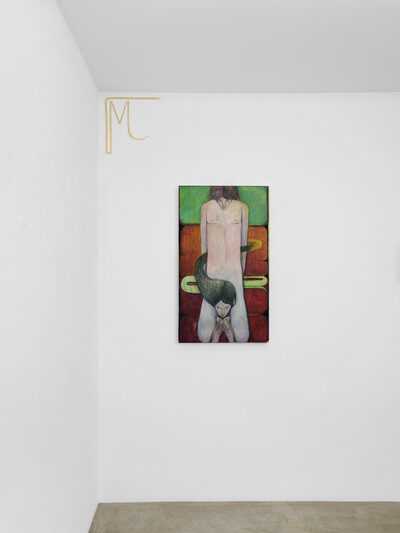
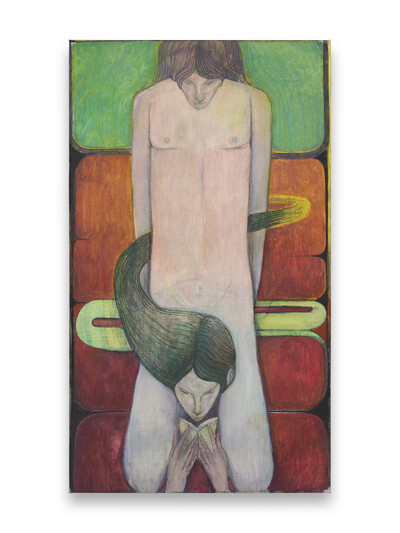
Paul Becker, Untitled (Litterateurs), 2026, gouache, watercolour and coloured pencil on canvas, 97 × 56 cm, unique
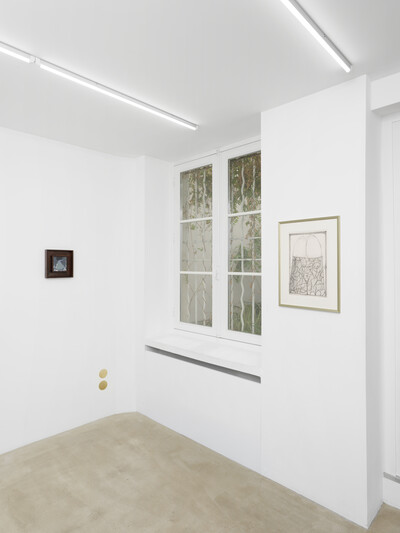
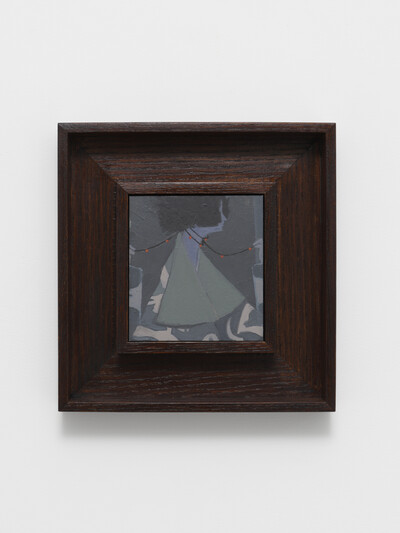
Paul Becker, Untitled (The Lights), 2026, oil on aluminum sheet, 12.3 × 11.4 cm (unframed), 24.5 × 23.5 cm (framed), unique
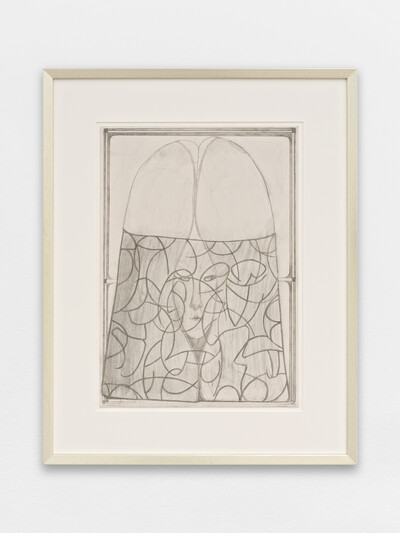
Paul Becker, Mourner & Veil, 2026, coloured pencil on paper, 42 × 29.7 cm (unframed), 59 × 46.7 cm (framed), unique
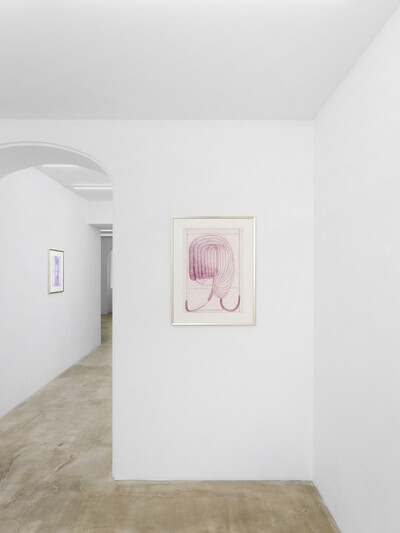
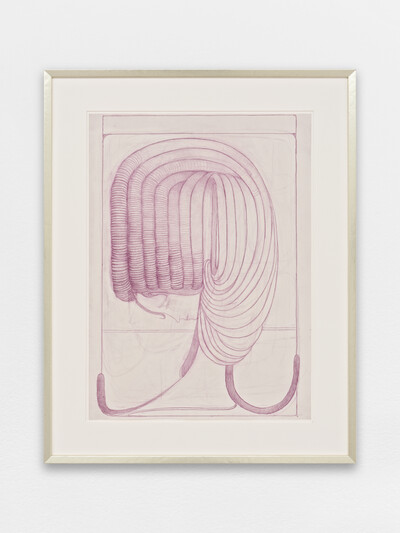
Paul Becker, Untitled (Ribbed Figure), 2026, coloured pencil on paper, 60.8 × 42 cm (unframed), 76.3 × 59 cm (framed), unique