Ezio Gribaudo, Homo Ludens, Paris
Ezio Gribaudo, Homo Ludens
Artist and publisher, Ezio Gribaudo (1929–2022, Turin) was awarded the Premio per la Grafica (Printmaking Prize) at the 33rd edition of the Venice Biennale in 1966, followed one year later by a prize at the São Paulo Biennial. This international institutional recognition came at a moment when this singular mediator was at the height of his career(1). Widely exhibited, he also established himself as a key figure in the world of art publishing through Edizioni d’Arte Fratelli Pozzo and Fabbri. Lucio Fontana, Michel Tapié, Asger Jorn, Peggy Guggenheim, Karel Appel, and Giorgio de Chirico were among his close professional and personal circle(2).
Behind the celebrated figure lies the playful child we tend to forget.
The solo exhibition of Ezio Gribaudo at Sans titre is conceived as a tribute structured around an idea encapsulated in its title: Homo Ludens. Borrowed from the well-known text by Pierre Restany on the spirit of the 1966 Biennale(3), it reactivates its acuity.
1966, a pivotal and playful year; 2026, its possible re-celebration, without forgetting the paving stones beneath the beach of 1968, when play turned into rage.
Crowned with success, Gribaudo’s 1966 Logogrifi now appear as discreet witnesses to a time of tension. The Premio per la Grafica would disappear two years later, and with it, a certain reverence toward History. Yet Ezio Gribaudo, while riding the spirit of his time, had already propelled himself into other temporalities: the distant past of geological strata, the enigmatic future, and the fervor of the present.
To challenge the causal linearity of time, he turns to play, understood as both a material and historical modality, subtly introducing a distinction between the sensational and the mysterious, otherwise referred to as Erlebnis (sensation, immediate shock) and Erfahrung (deep experience)(4). Play as a material modality can be measured through the omnipresence of his technological environment, which continuously flowed into his work. Trained in close proximity to printing presses and typographic characters in the 1960s(5), Ezio Gribaudo became accustomed to industrial materials whose intended function he subverted. The Flani, for example, are produced from “flans,” cardboard matrices used to create metal plates for printing newspaper pages. Flano (1965), bearing the phrase “perché avremmo dovuto fare morire il maggiolino?,” contains the tension of a spectacle on the verge of collapse. In Gribaudo’s hands, the image of the Volkswagen Beetle is as striking as it is shrouded in silence. Marked by diffuse stains, it slowly moves toward a spectral presence, restoring a trace of its time.
Play exerts an even greater power of temporal and semantic alteration in the Logogrifi, these chalcographic inventions through which fragments of the worlds of communication and printing are rendered mute and clandestinely playful. The very term invites a riddle: logos (speech, language) and griphos (enigma, fishing net), immediately evoking an enigmatic language unfolding through imprint, obtained by embossing matrices, either recovered or created by the artist, onto blotting paper. Here, in Greco delle iscrizioni (1966, also exhibited at the Venice Biennale), the latency of a tank. There, the semblance of a mother and child (Logogrifo, 1966). Elsewhere, an unpredictable and fascinating graphic invention scattered with organic circular forms (Diacritico II, 1967, shown in São Paulo Biennal), and many other “rarefied and alienating atmospheres, impalpable and ethereal, lucid and ironic, or formally impersonal like an aseptic sampling of stylistic codes(6).”
Faced with these silent landscapes and fantastical orographies, one question remains: where are we transported (in the sense of fahren, to travel, inherent to Erfahrung)?
Into the poetic eloquence of silence?
Into a formal ambiguity that resists commonplace spectacle?
Into play, as a discreet modality of history, summoning the topographical latencies and iconography of our childhood?
Or, more simply and more vertiginously, into the time of the dinosaurs?
Freed from the cages of time, the dinosaur is an animal whose presence is measured through its trace, whether fossil or reconstruction. An imaginary companion of Ezio Gribaudo, it takes the form of a brontosaurus that welcomes visitors in the garden of his Turin studio and occupies a central place in a personal bestiary populated by butterflies, horses, and hybrid creatures. Across his body of work, the animal is the toy par excellence: a cultural apparatus and a vehicle of memory. Yet it is also, more prosaically, a typographic matrix.
It is in this dual nature that it reappears in the exhibition, particularly above our heads. The cage sculptures, drawn directly from his studio, stage with lucidity and complicity animals in conditional freedom: cats, horses, and other creatures balance above the void, suspended between sky and ground.
Below, the works from the Teatro della Memoria corpus summon animal presences that call for a joint displacement of body and imagination. Born from the remnants of Logogrifi, they juxtapose altered imprints stemming from Gribaudo’s travels in Asia. A second work, created between 1983 and 1988, further blurs the lines. This collage of Logogrifi, covered in pastel, composes a score that is both childlike and erudite, in the service of memory. Butterflies, a dromedary, a beech leaf, or elephants offer us an anti spectacle of the living world.
Faced with these animals, embossed in paper, colored, or existing as matrices, should we not look to the other side of the image? The zoo of Turin’s Michelotti Park, whose creation coincided with Gribaudo’s years at Società Nebiolo in the early 1950s and whose closure aligns with the emergence of Teatro della Memoria in the late 1980s, may constitute a discreet yet decisive background to these works. Reduced to Erlebnis, the animal there is presented as spectacle, stripped of its own journey. And it is perhaps against this condition that Gribaudo works: withdrawing animals from pure visibility in order to restore them as entities that traverse. A slow and fertile metamorphosis, an enigma, a personal glossary that plays and travels.
Il gioco deve continuare. Perché avremmo dovuto fare morire il maggiolino?
The game must go on. Why should we have had to let the beetle die?
Julia Marchand
–
(1) To complete the picture of this decade, it is worth recalling the prize awarded at the 9th National Quadriennale of Art in Rome in 1965.
(2) His presence in Venice, for example, predates his consecration in 1966. As early as 1961, he exhibited at Carlo Cardazzo’s Galleria del Cavallino, a stronghold of the Italian avant garde from the 1950s to the 1970s.
(3) Pierre Restany, in Domus, August 1966.
(4) In continuation of Walter Benjamin’s reflections, see Giorgio Agamben, Infancy and History: The Destruction of Experience and the Origin of History, Paris, Payot, 2002 (French edition).
(5) In the early 1960s, he worked as a type designer at the renowned Nebiolo foundry in Turin, where he developed his interest in typographic characters and printing machines (source: Archivio Gribaudo).
(6) Nicola Micieli in GRIBAUDO. Opere 1963-1988. “Il teatro della memoria e altre impronte”, Fabbri Editori, Milano, 1989.
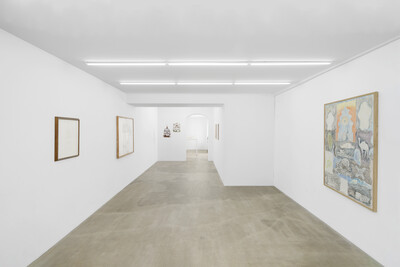
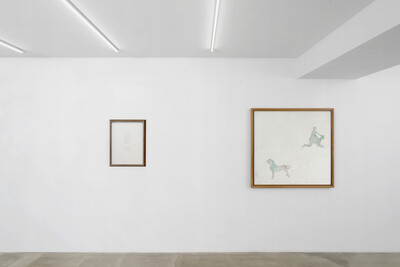
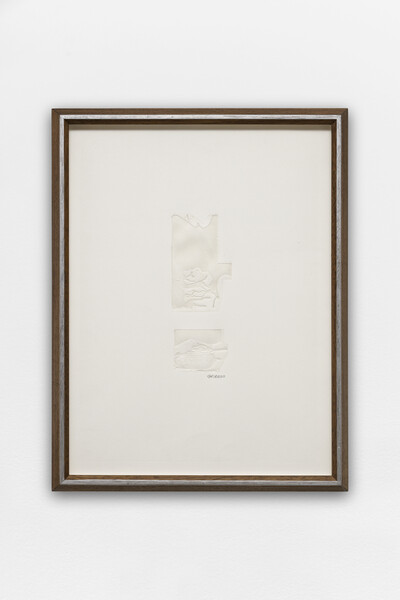
Ezio Gribaudo, Greco delle iscrizioni, 1966, relief on buvard paper, 62 × 48 cm (framed), unique
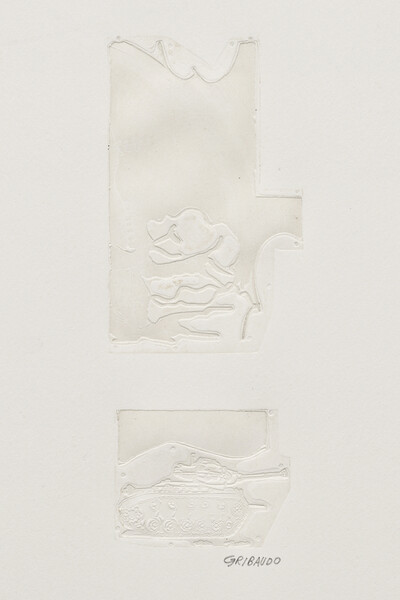
Ezio Gribaudo, Greco delle iscrizioni (detail), 1966
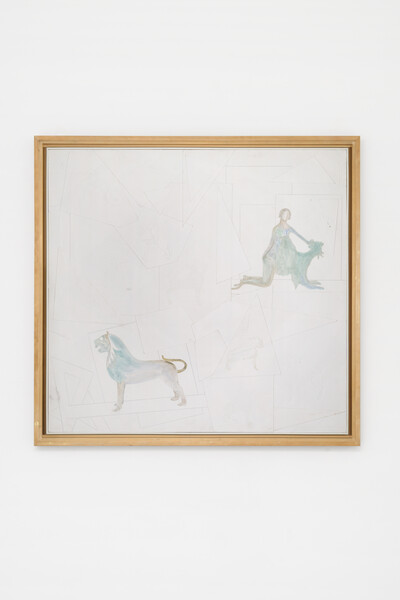
Ezio Gribaudo, Teatro della memoria, 1980-1989, mixed media and collage, 95 × 100 cm, unique
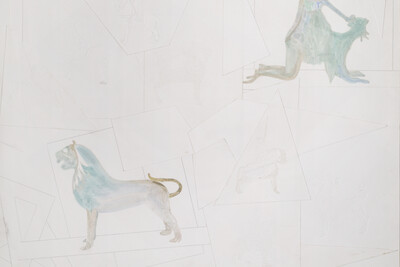
Ezio Gribaudo, Teatro della memoria (detail), 1980-1989
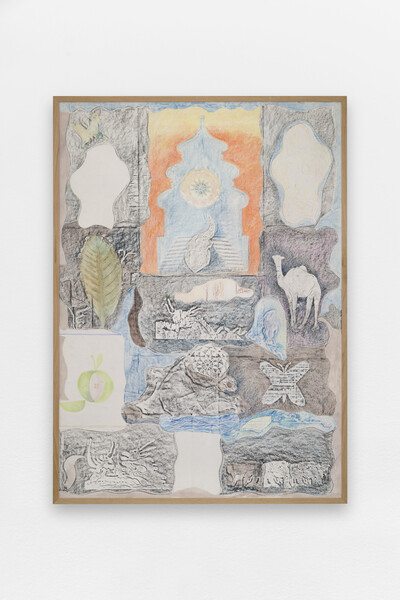
Ezio Gribaudo, Teatro della memoria, 1983-1988, mixed media on paper, 140 × 100 cm, unique
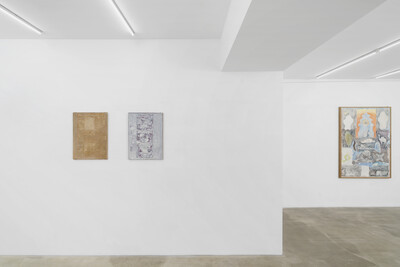
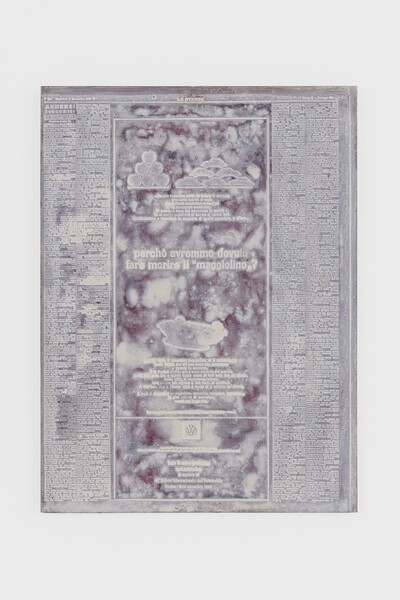
Ezio Gribaudo, Flano, 1965, mixed media, 58 × 43 cm, unique
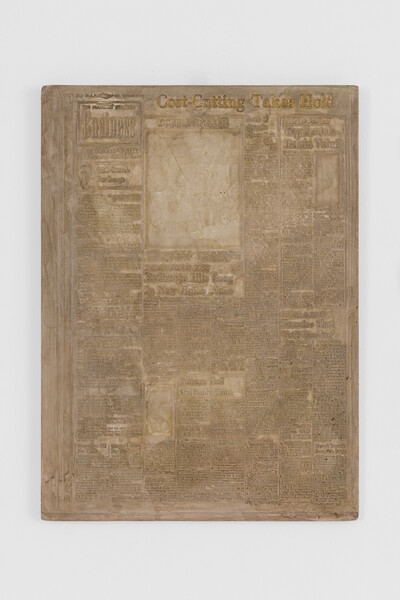
Ezio Gribaudo, Flano, 1965, mixed media, 59 × 43 cm, unique
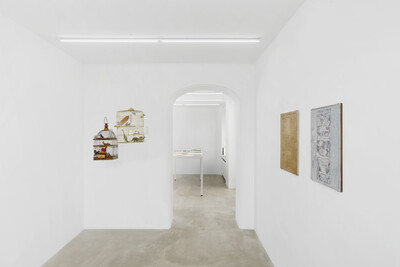
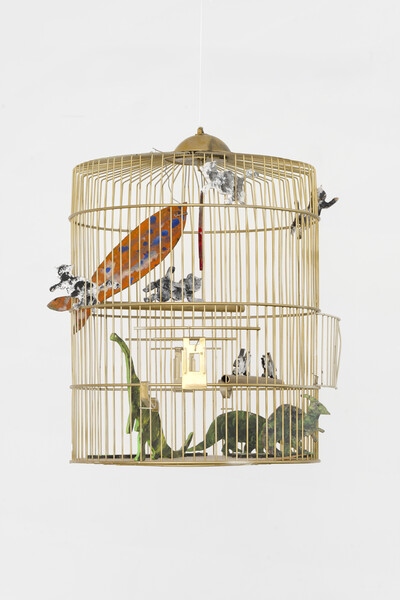
Ezio Gribaudo, Archeologia Incantata, 1969-2013, mixed media, 35 × 30 × 30 cm, unique
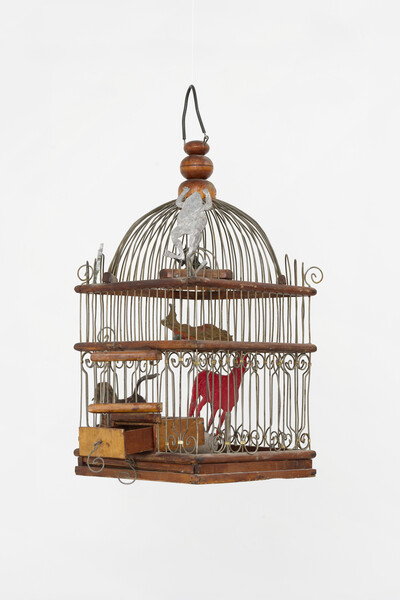
Ezio Gribaudo, Archeologia Incantata, 1969-2013, mixed media, 47 × 25.5 × 25.5 cm, unique
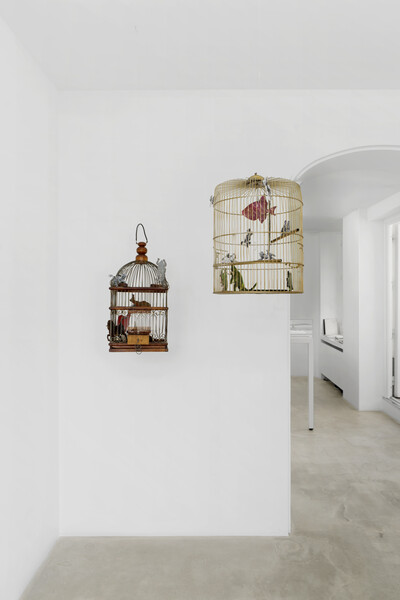
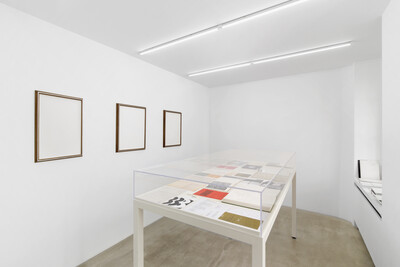
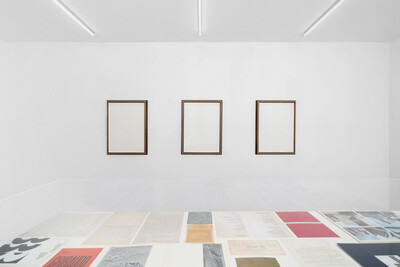
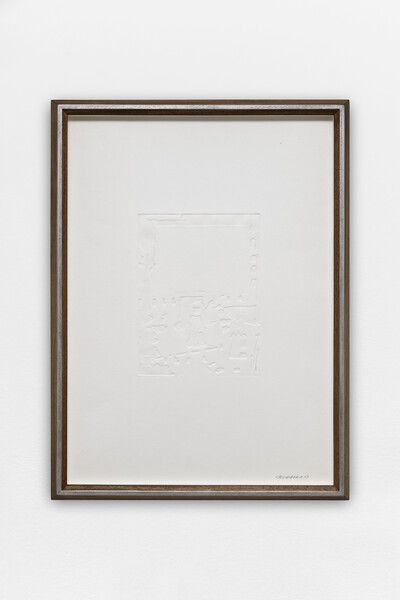
Ezio Gribaudo, Logogrifo, 1967, relief on buvard paper, 65 × 48 cm (framed), unique
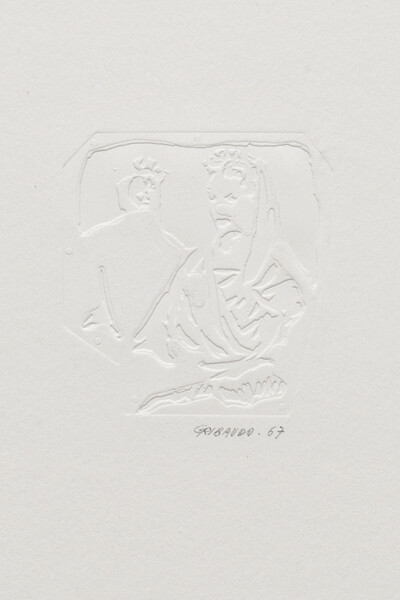
Ezio Gribaudo, Gerolessico IX (detail), 1967, relief on buvard paper, 65 × 48 cm (framed), unique
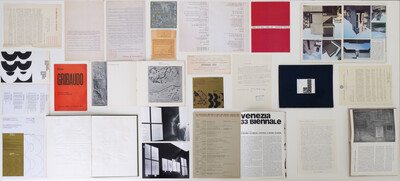
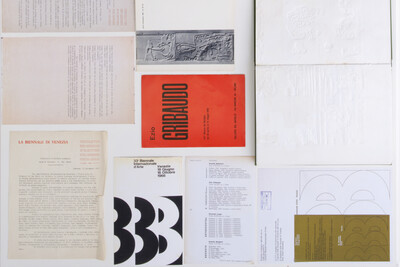
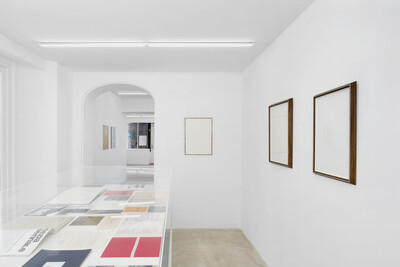
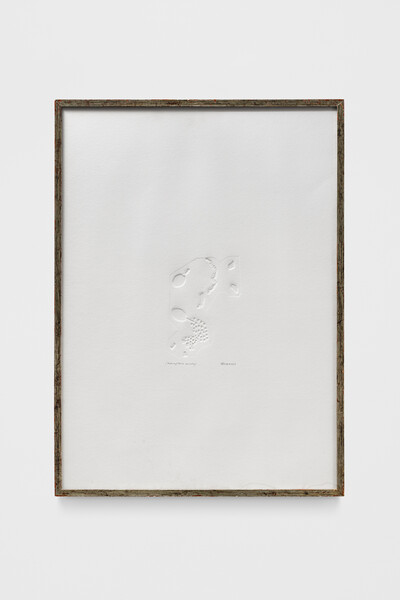
Ezio Gribaudo, Diacritico II, 1967, relief on buvard paper, 59.3 × 43.3 cm (framed), unique
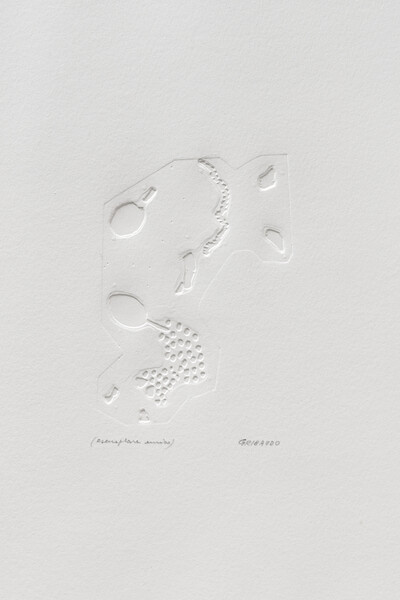
Ezio Gribaudo, Diacritico II (detail), 1967